

The Best Fredericksburg Wineries for Wine Lovers Who Actually Care About the Wine
Let’s be honest. A pretty vineyard, a great patio, and a glass of wine can make for a lovely afternoon. But if you’re the kind of person who wants to know what’s in the glass, where the grapes came from, and who’s responsible for making it taste that way, you might want to be a little more selective about your Fredericksburg winery itinerary.
The Texas Hill Country has plenty of places to enjoy a day out. These seven wineries are on our list for a different reason: the wine deserves your attention.
We’ve been driving Texas wine country since 2013, and these are the kinds of stops we’d recommend to visitors who want to explore the people, grapes, and ideas shaping Texas wine.

1. CALAIS Winery
For: French-inspired wines and thoughtful winemaking.
If the wine comes first, CALAIS Winery belongs on your radar. Winemaker Benjamin Calais brings a French perspective to Texas-grown grapes, with a focus on Bordeaux varieties and wines that reward a little attention. The intimate wine-cave setting makes this a particularly good stop for guests who would rather talk about what’s in their glass than spend the afternoon posing beside it.
Our take: Come curious, ask questions, and give the wines your full attention.

2. French Connection Wines
For: Rhône varieties and a different expression of Texas wine.
From the same winemaking vision behind CALAIS, French Connection Wines gives Rhône varieties their own spotlight. The wines are made from 100% Texas-grown fruit, exploring grapes and styles that don’t always get the attention they deserve in a region often associated with big reds.
It’s a chance to see how the same broad commitment to Texas fruit can lead to a different wine conversation.
Our take: A worthwhile stop for anyone interested in the range of varieties Texas can grow and the styles local winemakers are developing.

3. William Chris Vineyards
For: Texas-grown wine and a deeper understanding of place.
William Chris helped put Texas-grown wine on the map for a wider audience. Its vineyard-first philosophy and relationships with Texas grape growers make it an important stop for visitors who want to understand where the state’s wine industry is headed.
Rather than treating Texas as a place that simply happens to produce wine, William Chris puts the growing region and its fruit at the center of the story.
Our take: Ask about the grapes, the growers, and what makes a particular vintage different. That’s where this visit gets interesting.

4. Ab Astris Winery
For: Boutique wines made entirely from Texas-grown fruit.
Family-owned Ab Astris is a great reminder that you don’t need a sprawling estate or a big production to take Texas wine seriously. The winery produces its wines on-site using 100% Texas-grown fruit and works with varieties including Tannat, Souzão, Clairette Blanche, Petite Sirah, and Montepulciano.
For wine lovers, that lineup is part of the appeal. These grapes offer plenty of opportunities to explore something beyond the familiar.
Our take: Ask what is tasting particularly well right now. The current lineup is a better guide than any preconceived idea of what Texas wine should taste like.

5. Pebble Rock Cellars
For: A more intimate, wine-focused experience with a winemaker.
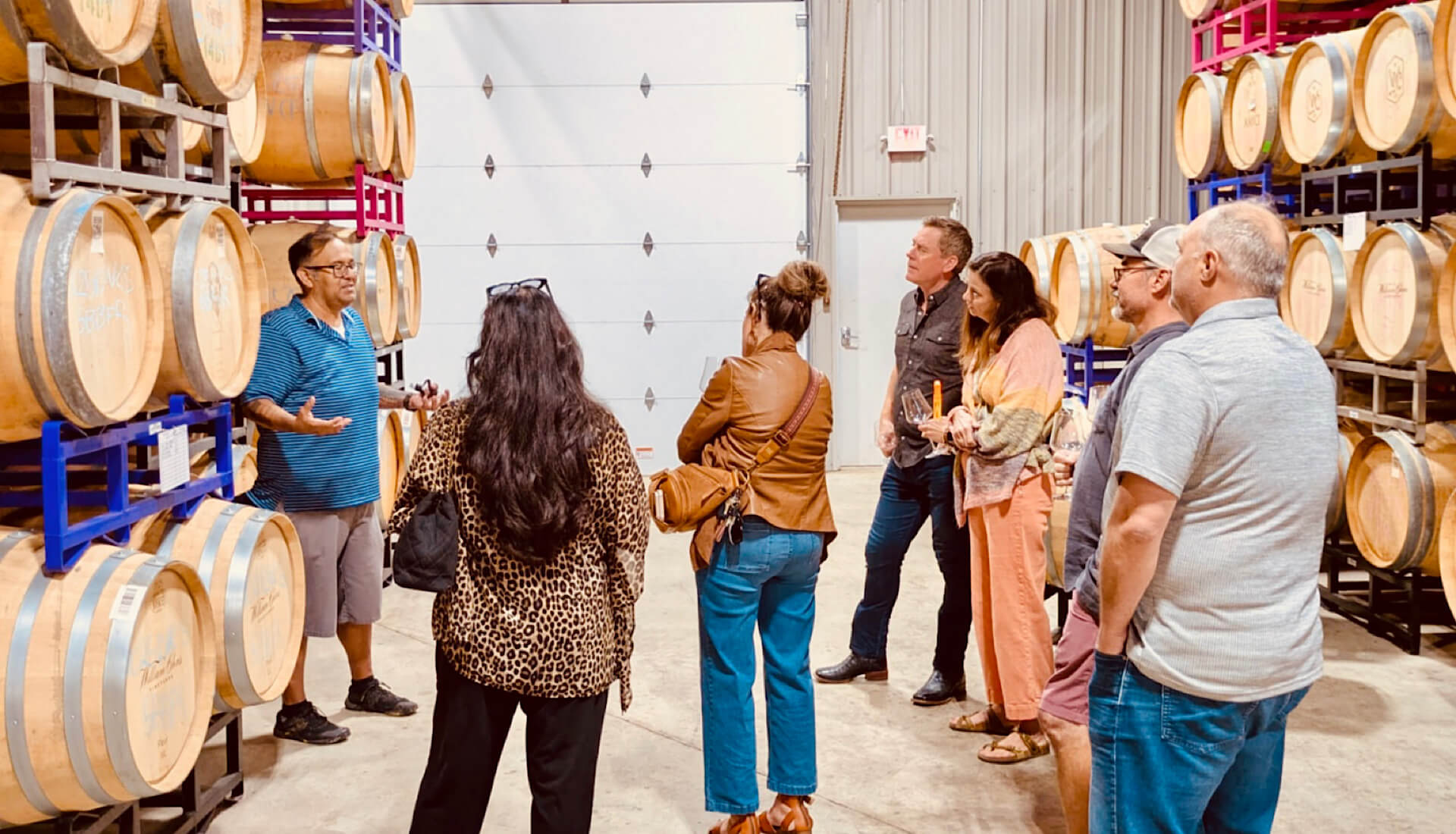
Pebble Rock Cellars earns its place on this list for the opportunity to get closer to the craft and the people behind the wine. It’s the sort of stop that appeals to visitors who enjoy smaller-scale producers and conversations with actual winemakers that go beyond tasting notes.
With their winemaker and owner, Rob Nida, at Pebble Rock Cellars you can intimately explore their wines with playful and interesting themes they change regularly.
Our take: This is a good one for curious drinkers who enjoy discovering a producer beyond the biggest names on the wine trail.

6. Lewis Wines
For: Distinctive Texas varieties and adventurous palates.
Lewis Wines has long been part of the conversation about what Texas wine can become. The winery works with Texas grapes and grower relationships to produce wines that explore the possibilities of the state’s growing regions.
If you’re interested in varieties such as Tannat, Touriga Nacional, or other grapes that thrive in warmer climates, Lewis is a particularly compelling addition to your itinerary.
Our take: Be open-minded. One of the pleasures of exploring Texas wine is finding a new favorite in a grape you didn’t know well before the visit.

7. Adega Vinho Winery
For: Portuguese- and Spanish-inspired varieties grown in Texas.
Adega Vinho brings another perspective to the Texas wine conversation, with a family-owned operation rooted in local vineyards and an interest in varieties associated with the Iberian Peninsula.
Those grapes can be well suited to warm growing conditions, making this an interesting stop for people curious about how variety, climate, and winemaking come together in the glass.
Our take: If your wine interests extend beyond the usual Cabernet and Chardonnay conversation, make room for this one.
Honorable Mentions
For: Portuguese- and Spanish-inspired varieties grown in Texas.
Adega Vinho brings another perspective to the Texas wine conversation, with a family-owned operation rooted in local vineyards and an interest in varieties associated with the Iberian Peninsula.
Those grapes can be well suited to warm growing conditions, making this an interesting stop for people curious about how variety, climate, and winemaking come together in the glass.
Our take: If your wine interests extend beyond the usual Cabernet and Chardonnay conversation, make room for this one.

How to Plan a Wine-Focused Fredericksburg Visit
Seven wineries make a great shortlist, not a realistic one-day itinerary. We recommend choosing three, perhaps four, for a full day of tasting. You’ll have more time to ask questions, compare wines, and actually remember what you enjoyed.
A few things to keep in mind:
- Ask about the fruit. Is it estate-grown, sourced from other Texas growers, or brought in from another region? Each answer tells you something different about the wine.
- Try something unfamiliar. Texas has a growing range of grape varieties worth exploring. Don’t let your usual wine order limit the experience.
- Talk to your tasting host. Ask about vintage variation, vineyard conditions, and the choices that shaped the wine.
- Plan your route. These wineries are spread across the Hill Country, so group nearby stops and arrange safe transportation before the first pour.
And remember, you don’t have to visit the most wineries to have the best wine day. Sometimes three thoughtful tastings beat six rushed ones.

Want to Get to Know Texas Wine Beyond the Tasting Room?
That’s our kind of wine day. At Cellar Rat Wine Tours, we draw on years of experience in the Texas wine industry to help guests explore the people, places, and bottles that make this region worth getting to know.
Whether you want a guided experience with insight into the wine or private transportation so you can choose your own destinations, we’ll help you make the most of your time in Texas Wine Country.
Explore our Private, All-Inclusive Tours and our Private Transportation Services to start planning your Fredericksburg wine day.
FAQs
Which Fredericksburg wineries are best for serious wine lovers?
CALAIS Winery, French Connection Wines, William Chris Vineyards, Ab Astris Winery, Pebble Rock Cellars, Lewis Wines, and Adega Vinho Winery are strong options for visitors interested in Texas-grown grapes, distinctive varieties, and thoughtful winemaking.
Do Fredericksburg wineries use 100% Texas-grown grapes?
Some do, while others may use fruit from outside Texas. Check each winery’s current sourcing practices and individual wine labels if Texas-grown fruit is important to you.
How many wineries should you visit in one day?
Three or four is a good target for a full day. It leaves time to enjoy each tasting, ask questions, eat, and travel between wineries without rushing.